Nuclear robots will spend the next few years proving that they can inspect, map, and handle work near radiation without putting people in the same room. The hard part is not giving a robot an arm; it is keeping sensors, software, power, and communications working when the site is hot, wet, dusty, or contaminated.
- Inspection is the clearest early job because it keeps people away from hazards.
- Remote control will remain important when a robot faces an unfamiliar task.
- Wider use depends on repair plans, test records, and safe recovery after failure.
Inspection comes before independence
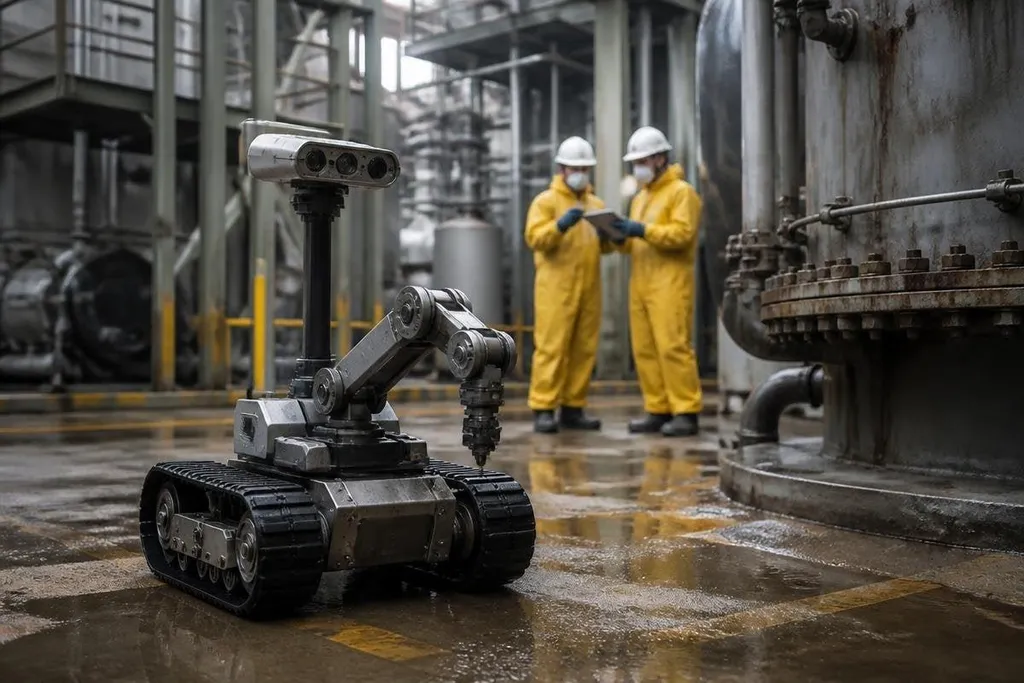
A nuclear site contains equipment that needs regular checks, yet some areas are hard or unsafe for a person to enter. A mobile robot could carry cameras, radiation sensors, microphones, or other tools through those spaces and send the results to a control room.
That work does not require human-like movement. The robot needs stable motion, clear video, accurate position data, and enough battery power to finish the route. A failed inspection robot still creates a recovery job, so operators need a way to locate it, tow it, or bring it back under remote control.
This is where the first useful systems are likely to gain ground. They can collect information without asking a person to stand beside the source of the hazard.
Radiation changes the machine
Radiation can damage cameras, processors, memory, cables, and motor controls. Heat, water, dust, and corrosive material can add more stress, so a robot built for a clean warehouse may need major changes before it enters a nuclear area.
The design may need shielding around sensitive parts, spare sensors, sealed housings, and software that records faults. Those choices add weight and cost. They also affect how long the robot can run and how much equipment it can carry.
A technical test should record the radiation level, exposure time, temperature, battery state, communication quality, and task result. Without those details, a video of a robot moving through a mock site tells you very little about field use.
Remote control will stay in the loop
Autonomy means a robot can choose some actions from sensor data. Teleoperation means a person sends commands from a safe location. Nuclear work will need a mix of the two because a planned route may be easy, while a damaged pipe or blocked passage can force a quick change.
The operator needs a clear view of the robot's surroundings and its own condition. A control screen should show battery charge, radiation readings, motor faults, link quality, and the last known position. If the wireless link drops, the robot needs a known safe action, such as stopping or returning along a tested route.
Those recovery rules also matter in mines and chemical plants, where a lost link can leave a robot in a dangerous place. Nuclear robotics coverage from Robot24.com can place these machines beside related field work, with the task, site, and test result kept in view.
Cleanup is a harder test
Inspection keeps the robot's task narrow. Cleanup and maintenance ask for more force, better contact sensing, and tools that can handle contaminated material without spreading it.
A robot may need to pick up an object, cut a cable, close a valve, or move waste into a container. Each action can change the robot's balance and expose its gripper or sensors to damage.
The software must also keep a record of what the robot touched and where it left each item.
That is why full independence remains unproven for many nuclear tasks. A machine can follow a known route and still need a person to approve an unfamiliar action. I'd judge a nuclear robot by its recovery plan before its headline task.
A practical buying test
Before a site buys or funds a system, ask for these answers:
- Name the task: What inspection, handling, or cleanup job will the robot perform?
- Set the limits: What radiation, heat, water, dust, and load conditions has the maker tested?
- Show the records: Are the test runs dated, repeatable, and tied to measured results?
- Plan the failure: How will staff find, power down, move, or retrieve the robot?
- Price the full job: Include training, shielding, spare parts, software, batteries, and decontamination.
- Keep a human check: Which actions need operator approval before the robot moves or grips?
Those answers separate a site tool from a demonstration. They also give operators a fair way to compare a robot with cameras, fixed sensors, or a human inspection team.
The near future belongs to nuclear robots that do narrow jobs repeatedly and leave a clear record of each run. Wider autonomy can wait until the machines show reliable recovery after radiation exposure, communication loss, and contact with the equipment they were sent to inspect.